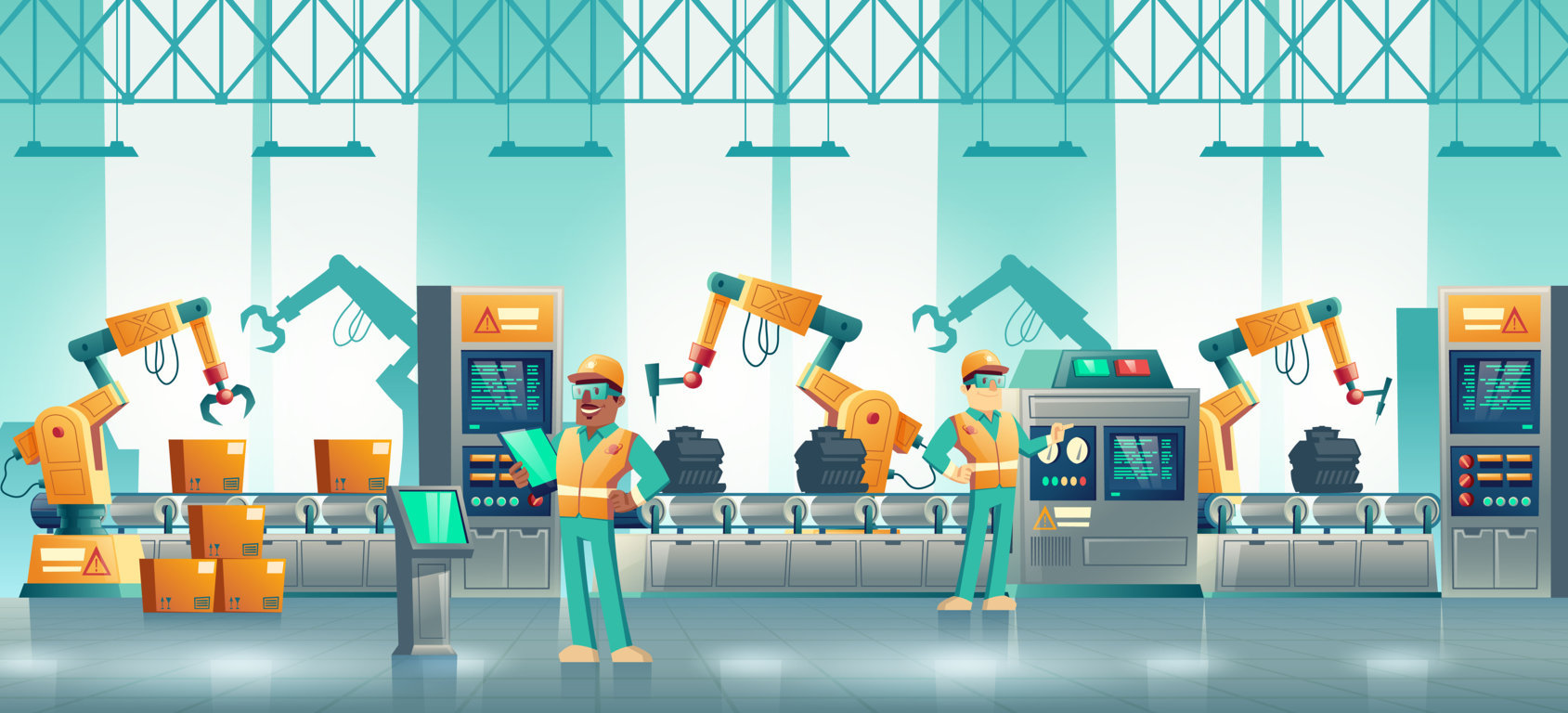
The Role of Robotics in Modern Manufacturing: Revolutionizing Production with Precision and Efficiency
Introduction:
In the ever-evolving landscape of manufacturing, innovation isn't just a choice; it's a necessity. Robotics has emerged as a game-changer, illuminating the path to greater efficiency, precision, and competitiveness in the manufacturing sector. In this comprehensive blog post, we will explore the pivotal role of robotics in modern manufacturing, delving into the latest advancements and technical details of various robot types, including collaborative robots (cobots) and automation, and how they are revolutionizing production processes.
The Evolution of Robotics in Manufacturing:
The integration of robotics into manufacturing represents a significant shift in the industry's landscape. It's more than just machines replacing human labor; it's about augmenting human capabilities, enhancing precision, and streamlining operations.
Advancements in Robotics:
- Collaborative Robots (Cobots): Collaborative robots, or cobots, have become
instrumental in manufacturing, combining impressive technical specifications with
human-machine collaboration. These robots typically feature 6-axis arms, capable of precise
and flexible movements. Cobots are designed to work alongside human workers, and their
advanced sensors enable them to stop safely when detecting human presence. They have a
payload capacity ranging from 3 kg to 16 kg, making them suitable for a variety of tasks.
- Precision: Cobots offer high repeatability, with accuracy levels down to millimeters.
- 24/7 Operation: While designed for collaboration, cobots can operate 24/7 with minimal maintenance.
- Weight Handling: Cobots can handle payloads ranging from lightweight electronics assembly to heavier materials in automotive manufacturing.
- Life Span: With proper maintenance, cobots have a lifespan of several years, making them a long-term investment for manufacturers.
- Industrial Robots: These robots are at the heart of automated manufacturing processes and come in various types:
- Articulated Robots: These robots have multiple rotary joints, providing exceptional flexibility with 6-axis or more. They excel in applications requiring precision and dexterity, such as welding, painting, and assembly.
- SCARA Robots: Selective Compliance Assembly Robot Arms (SCARA) are known for their high-speed, precise movements. They are often used in pick-and-place tasks, electronics assembly, and packaging.
- Delta Robots: These robots have a parallel-link structure, offering incredible speed and accuracy. They are ideal for tasks like high-speed pick-and-place operations in the food and pharmaceutical industries.
- Cartesian/Gantry Robots: These robots move linearly along three or more axes. They are used for applications demanding heavy payloads, such as CNC machine loading and unloading.
- 6-Axis vs. 4-Axis: The choice between 6-axis and 4-axis robots depends on the application. 6-axis robots offer greater flexibility and can reach a wider range of positions. 4-axis robots are typically more cost-effective and suitable for tasks with fewer degrees of freedom.
Applications of Robotics in Modern Manufacturing:
- Assembly and Production: Industrial robots excel in repetitive tasks like assembly, welding, and material handling. They can work tirelessly, leading to increased production rates and improved product consistency.
- Quality Control: Vision systems and sensors on robots can detect defects and anomalies in real-time, ensuring that only products meeting quality standards make it to the market.
- Packaging and Logistics: Robots play a crucial role in packaging, sorting, and logistics. They can optimize warehouse operations, reduce shipping errors, and enhance supply chain efficiency.
- Healthcare and Pharmaceuticals: Surgical robots are transforming healthcare by enabling minimally invasive surgeries with greater precision. Robots are also used in pharmaceutical manufacturing for precise drug formulation and testing.
- Aerospace and Defense: Robots are used in aerospace and defense industries for tasks like aircraft assembly, maintenance, and even bomb disposal, where human safety is a concern.
Conclusion:
The role of robotics in modern manufacturing cannot be overstated. From cobots enhancing human-robot collaboration to advanced automation systems driving Industry 4.0, robotics is reshaping the industry. Manufacturers who embrace these advancements gain a competitive edge, increased efficiency, and product innovation.
Call to action:
Ready to harness the power of robotics in your manufacturing processes? Contact SAXEO Manufacturing Solutions India Private Limited to explore how we can integrate cutting-edge robotic solutions into your operations. Let innovation be your guide on this transformative journey towards manufacturing excellence.